


Canine Cushings syndrome is a condition in which one or both adrenal glands produce an excess of cortisol and/or other adrenal hormones. Elevated adrenal hormone levels cause a variety of symptoms as well as deleterious effects on the body. The disease can be treated, not cured, and requires lifelong care.
Common names:Cushings syndrome, Cushings disease.
Scientific name:Hyperadrenocorticism
Diagnosis
Signalment
Canine Cushings syndrome occurs most commonly in middle-aged to older dogs, though it can occur at any age. The incidence is higher in certain breeds, including the miniature poodle, dachshund, terrier breeds, boxer and beagle.
Incidence/prevalence
Cushings syndrome is one of the most common endocrine (hormonal) disorders of dogs.
Geographic distribution
Canine Cushings syndrome occurs worldwide.
 Clinical signs(primary, most to least frequent, scientific term, synonyms)
Increased thirst (polydipsia), Increased urination (polyuria), Increased appetite (polyphagia), Hair loss (alopecia), Blackheads (comedones), Potbelly (abdominal distension), Panting, Muscle weakness.
Clinical signs(secondary, most to least frequent, scientific term, synonyms)
Decreased libido, Respiratory distress (dyspnea) can occur due to pulmonary thromboembolism (blood clot in the lungs). Neurological signs such as seizures, behavior changes, blindness, circling and disorientation can occur.
Causes(scientific, common term)
Pituitary microadenoma (growth on the pituitary gland less than 1 centimeter in size), Pituitary macroadenoma (growth on the pituitary gland greater than 1 centimeter in size), Pituitary adenocarcinoma (malignant growth on the pituitary gland), Adrenal adenoma (benign growth on the adrenal gland), Adrenal adenocarcinoma (malignant growth on the adrenal gland), Iatrogenic (caused by medication with corticosteroid hormones).
Organ systems affected(most to least affected)
Endocrine system (hormones), Skin and hair coat, Immune system, Liver, Muscles, Neurological system, Respiratory system, Kidneys, Pancreas, Gastrointestinal system, Hematological system (blood cells), Skeletal system (bones).
Diagnostic tests
Blood tests are most commonly used to diagnose Cushings syndrome in dogs. These tests include the ACTH stimulation test, the low-dose dexamethasone suppression test, the high-dose dexamethasone suppression test and the endogenous ACTH level. A urine test called the urine cortisol-creatinine ratio may be used to screen for Cushings syndrome. Ultrasound examination of the adrenal glands is performed. MRI may be used to evaluate the pituitary gland. Skin biopsy may be used in dogs that exhibit hair loss or skin abnormalities. Nerve and muscle biopsies may be used for dogs exhibiting an abnormal gait suspected to be due to Cushings syndrome.
Differential Diagnosis
Other endocrine (hormonal) disorders, Other dermatological conditions, Other causes of increased thirst and urination, including kidney disease, infections, liver disease and psychological issues, Other causes of neurological signs, such as inflammatory, cancerous and infectious diseases of the nervous system.
Overview
Canine Cushings syndrome is a condition in which one or both adrenal glands produce an excess of cortisol and/or other adrenal hormones. Dogs have two adrenal glands in the abdomen, located near the kidneys. In normal dogs, the pituitary gland of the brain regulates hormone production by the adrenal glands.
In the most common form of Cushings syndrome in dogs, the pituitary gland develops a small, benign growth called a microadenoma. This growth produces too much of the messenger hormone ACTH, causing the adrenal glands to overproduce cortisol. In some cases, the pituitary growth becomes large enough to produce neurological signs, such as behavior changes or seizures (macroadenoma). Less commonly, canine Cushings syndrome is caused by a tumor on one of the adrenal glands, these tumors are malignant in approximately 50 percent of dogs.
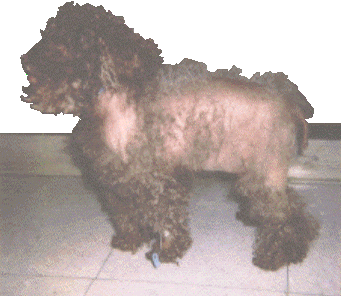
Increased levels of cortisol or other adrenal hormones cause a variety of clinical signs and also deleterious effects on multiple organ systems. Affected dogs often exhibit increased thirst and urination and/or increased hunger. Other signs include thinning of the hair coat, skin comedones (blackheads), panting, a potbellied appearance and muscular weakness.
Neurological abnormalities may develop in dogs with macroadenomas. Excess adrenal hormones can result in skin and urinary tract infections, diabetes, hypertension (high blood pressure), excess protein in the urine, inflammation of the pancreas and blood clots in the lungs.
The administration of corticosteroid-containing medications can cause similar signs.
Treatment
Home Care
Dogs exhibiting signs consistent with Cushings syndrome should be evaluated by a veterinarian.
Professional Care
Blood tests are generally used to diagnosis Cushings syndrome. These can include the ACTH stimulation test, the low-dose dexamethasone suppression test, the high-dose dexamethasone suppression test and the ACTH level. No test is 100 percent accurate, and sometimes several different tests are required.
A urine test called the urine cortisol-creatinine ratio can be used as a screening test. Abdominal ultrasound examination is performed to evaluate the adrenal glands and other organs. MRI may be used to evaluate the pituitary gland. It is essential to differentiate Cushings syndrome caused by a growth on the pituitary gland from that caused by an adrenal tumor, as the treatment and prognosis are different.
Action
Appropriate treatment of Cushings disease depends on the cause. Adrenal tumors are surgically removed if possible. Pituitary Cushings disease is most commonly treated with medications including mitotane (Lysodren®) or trilostane. Treatment requires very close monitoring, and consultation with a veterinary internal medicine specialist may be recommended. Surgery to remove the pituitary gland can be performed at some institutions. Radiation therapy may be helpful in dogs with pituitary macroadenomas.
Outcome
Appropriate treatment can reduce the signs of Cushings syndrome and reverse many of the effects. Improvement may be gradual, and patience is required. Although timely removal of adrenal tumors may be curative, the prognosis in dogs with malignant tumors of the adrenal gland is guarded. With malignant tumors of the pituitary gland, the prognosis is grave.